

Prayer Chants, Lullabies, and the Brain: What Neuroscience Has to Say
Prayer chants, lullabies, and more broadly, repetitive vocal practices, occupy an important place in many human cultures. They are often associated with feelings of calm, social cohesion, or intense spiritual experience. In some media or popular science discourses, these effects are sometimes attributed to a supposed "prayer hormone" or simplified biological mechanisms.
Rather than searching for a miracle molecule, contemporary neuroscience, informed by a sensory anthropology approach, invites us to look at what actually happens in the body and in interaction: breathing slowing down, voices synchronizing, heartbeats aligning. These sensory and motor micro-events, now detectable through advanced imaging techniques (EEG, fMRI, hyperscanning), produce calming effects and feelings of unity.
Current research shows that these experiences rely on multiple mechanisms—emotional, physiological, cognitive, and social—largely shared with other forms of musical or collective experiences, rather than on any clearly identifiable religious specificity.
Text: © Florence de Kervadec 2026. Last updated: May 29, 2026.
Reading further…
The Neurochemistry of Singing: Real but Complex Effects
Oxytocin: A Discussed Hypothesis
Oxytocin, often presented as a "social bonding hormone," has been studied in the context of group singing. Some hypotheses suggested that it might increase during synchronized activities such as choral singing or sung rituals. However, the results remain mixed. Several studies do not show a systematic increase in oxytocin after group singing, and the salivary or blood measurements used only imperfectly reflect its brain activity, due in particular to the blood-brain barrier and the brevity of hormonal variations.
Endorphins: Response to Synchronized Activities
Endorphins, endogenous opioids associated with well-being and pain reduction, also appear to be involved in certain synchronized vocal activities. Group singing, like dancing or certain repetitive rituals, may promote their release by creating a shared, rhythmic effort. But here again, direct measurements remain difficult.
Dopamine and Musical Reward
Dopamine is also often mentioned in research on music. Contrary to a widespread idea, it is not simply a "pleasure molecule"; it is mainly involved in the mechanisms of motivation, anticipation, and reward. Neuroimaging studies have shown that emotionally powerful musical experiences can activate dopaminergic regions. However, direct measurement remains delicate due to its very brief release (a few milliseconds). These effects appear with secular music as well as with religious chants.
Cortisol and Stress Reduction: The Most Well-Attested Effect
The most robust finding probably concerns cortisol, a marker of stress. Several studies show that after a group singing session, cortisol levels often decrease significantly. This reduction appears to be linked to several combined factors: slowing of breathing, focused attention, sonic repetition, a safe social environment, and activation of the parasympathetic nervous system.
Lullabies: A Particularly Illuminating Example

Universal across cultures, lullabies exploit very specific acoustic features: slow rhythm, lower pitch, simple and soothing melodic repetition. In infants, they quickly produce a decrease in heart rate, pupil constriction, and a reduction in electrodermal activity—all measurable markers of calming via electrocardiography, pupillometry, and skin conductance. These techniques literally allow us to "see" the baby's body relax in real time.
In the mother, lullaby singing also synchronizes physiological states: a decrease in cortisol, and in this intimate dyadic context, a few preliminary human studies suggest a possible increase in oxytocin in both mother and child, though evidence remains limited.
From the perspective of sensory anthropology, the lullaby is a device of sonic and rhythmic envelopment that shapes the newborn's breathing and emotion. These effects do not rely on "magic," but on very ancient circuits: the maternal voice contributes to the regulation of the infant's autonomic nervous system, notably through mechanisms involving breathing, rhythm, and the parasympathetic nervous system. Developmental neuroscience studies show that lullabies simultaneously activate multiple brain regions (auditory cortex, limbic system, prefrontal cortex). EEG or fMRI studies during sleep also show a rhythmic response entrained to the lullaby. Some research also suggests beneficial effects on the maturation of sensory and socio-emotional networks in premature infants, observable through measurements of functional connectivity in resting-state fMRI.
Important to note, these benefits can appear with lullabies from different cultures or languages: it is the musical structure itself that matters, not the semantic content. This finding is a key for sensory anthropology: meaning resides not only in words, but in the sonic and temporal material of the song.
Imagery Techniques and Embodied Phenomena
Researchers use different methods to study these phenomena. Rather than a simple list, let's see what these techniques allow us to see and feel:
- Salivary hormone assays: They measure cortisol, oxytocin, or alpha-amylase. Their limitation: they say nothing about the precise moment when emotion arises, and for oxytocin and endorphins, they imperfectly reflect brain activity.
- Electroencephalography (EEG): It captures the brain's electrical fluctuations at the millisecond level. During a mantra, meditative singing, or slow breathing, EEG shows an increase in alpha and theta rhythms: one can literally see the brain slow down and enter a state of calm attentiveness. These rhythms do not constitute a specific "spiritual signature" (they are also found in calm concentration or creativity), but they indicate a state of heightened sensory receptivity.
- Functional magnetic resonance imaging (fMRI): It maps activated brain regions. Contrary to some misconceptions, fMRI does not show a "God spot" or an area dedicated to the sacred. It highlights the activation of networks involved in emotion, attention, autobiographical memory, social cognition, and reward circuits. In sensory anthropology, one would say that the entire brain becomes an orchestra.
- Hyperscanning (simultaneous EEG or fNIRS on multiple people): This is the newest and most fascinating technique for the study of group singing. It allows real-time recording of brain activity in several interacting individuals and measures the "coupling" between brains. What is then observed is inter-brain synchronization: the brainwaves of the singers align dynamically, particularly in the frontal and temporal regions.
Synchronization and Collective Cohesion
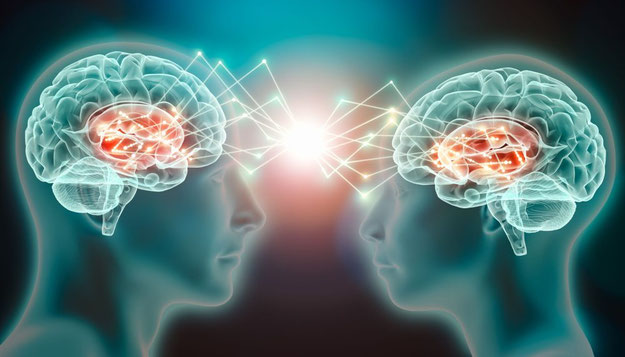
A particularly robust finding concerns the physiological synchronization observed during group singing. Studies have shown that choir singers can progressively synchronize their respiratory and cardiac rhythms. This is a phenomenon that one can literally feel: the ribcage rising at the same rhythm as one's neighbor, the pulse aligning without conscious will. This synchronization contributes to the feeling of cohesion, calm, and unity experienced in certain collective rituals.
Recent hyperscanning research reveals an even more subtle phenomenon: inter-brain synchronization increases during choral or duet singing, especially when singing in unison, and it is reinforced by visual, auditory, or physical contact between singers. Some researchers speak of "inter-brain coupling," as if the participants' brains momentarily form a single large network.
From the perspective of sensory anthropology, this synchronization is not merely a quantitative datum: it is the biological basis of what participants describe as "becoming one," "being carried away," "losing the boundary between self and others." Imaging techniques make visible a phenomenon that bodies already experience in the moment, but which often escapes reflective consciousness.
In mother-infant dyads during a lullaby, neural and rhythmic synchronization that reinforces attachment and mutual emotional regulation is also observed. To date, very little published data exists on hyperscanning applied to lullabies, but initial explorations are intriguing and suggest that the mother's brain and the baby's brain can enter into oscillatory resonance, like two tuning forks.
A particularly intriguing phenomenon, revealed by hyperscanning studies, is that during slow, repetitive singing, participants' brainwaves align not only with each other, but also with the very rhythm of the melody. This neuro-acoustic coupling largely explains the profound feeling of unity and immersion experienced both in intimate lullabies and in collective prayers.
Top-Down Mechanisms: When Beliefs Shape Experience
One of the most important contributions of cognitive neuroscience is the highlighting of top-down mechanisms: what we believe, expect, or imagine profoundly modifies sensory perception and emotion.
Let's take an embodied example: the same melody can be experienced as a simple secular song by one person, but as an experience of transcendence by a believing person who recognizes it as a psalm. fMRI shows that regions of the prefrontal cortex (linked to beliefs and expectations) send modulatory signals to auditory and limbic areas. The meaning given a priori changes the way sound is immediately processed.
Some cognitive psychology experiments have shown that simply labeling music as "sacred" (vs. "secular") modifies emotional judgments and even the electrodermal activity of listeners. This is a top-down effect: the cultural label somehow descends into the body. In sensory anthropology, this means that the religious is not a property of the sonic object, but an emergent quality of the relationship between sound, body, and symbolic world. Prayer chants are not biologically special; they become special because participants invest them with intentions, memories, and rituals.
Studies comparing religious chants and secular music confirm this nuance: the basic neurobiological mechanisms are largely shared. However, in committed believers, religious chants can enhance emotional engagement, feelings of transcendence, autobiographical memory, or personal identity, precisely through these top-down processes.
Conclusion
Current scientific data do not allow us to speak of a "prayer hormone" or a specifically religious biological mechanism. Prayer chants, lullabies, and repetitive vocal practices mobilize general capacities of the human brain: emotional regulation, social synchronization, breathing, and attention.
But what new imaging techniques (hyperscanning, fMRI, EEG) add is the ability to see the invisible: the alignment of heart rhythms, the coupling of brainwaves, the reduction of stress. And what sensory anthropology brings is the ability to situate these data within lived experience: the warmth of a nearby voice, the collective thrill, the soothing effect of rocking.
The religious or spiritual dimension profoundly modifies subjective experience through these cognitive mechanisms: beliefs and expectations transform a simple chant into a sacred encounter. What neuroscience thus highlights is not an autonomous "spiritual brain," but the way in which beliefs, emotions, the body, and social relationships are embodied in sensory practices—whether it be a collective ritual where brains synchronize, or a mother singing a lullaby to her child.