

Lullabies: Sung Prayers
Lullabies, those soft, repetitive melodies meant to soothe and put young children to sleep, hold a unique place in human practices. Often considered a "universal" or nearly universal musical genre, they share deep formal, functional, and symbolic characteristics with prayers. At the intersection of anthropology and ethnomusicology, comparative analysis reveals that lullabies are not merely tools for emotional and physiological regulation, but also ritual acts of invocation, protection, and cultural transmission—akin to secular or hybrid prayers. This proximity is supported by ethnographic research, cross-cultural studies, and recent acoustic analyses.
Text: © Patrick Kersalé, Florence de Kervadec 2026. Photos: © Patrick Kersalé 1997-2026. Last updated: May 28, 2026.
Further Reading…
Relative Universality and Shared Forms
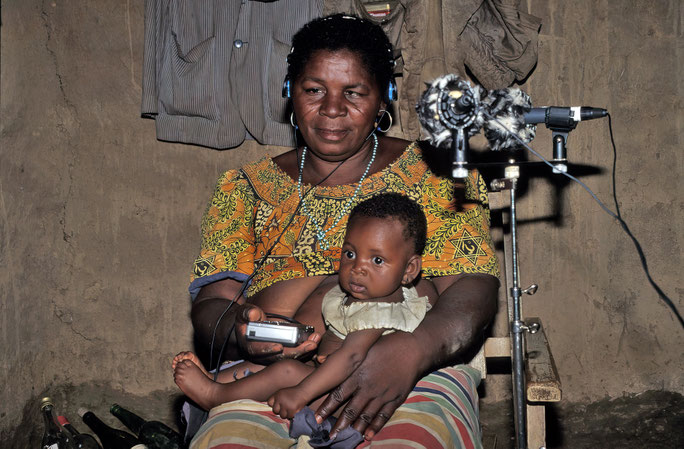
Ethnomusicological and anthropological research confirms that singing directed toward infants is extremely widespread. In a comprehensive ethnographic survey covering 124 societies, lullabies in the broad sense — any song or rhythmic vocalization intended to soothe a child — were found in 96.8% of cases. In the strict sense, referring to a dedicated and culturally preserved repertoire, lullabies are present in approximately 78% of societies.
Samuel Mehr and his colleagues, in The Natural History of Song (2019), demonstrated that lullabies constitute one of the four universal behavioral contexts of human singing, alongside dance songs, healing songs, and love songs. Naive listeners from diverse cultural backgrounds easily recognize lullabies through their acoustic characteristics: slow tempo, moderate pitch, simple melodic contours, and repetition. These traits promote physiological synchronization — including heart rate and breathing — between singer and listener.
Prayers often share these same properties: repetition (mantras, litanies, rosaries), soothing rhythm, and an intimate or incantatory vocal range. In both cases, singing functions as a form of emotional regulation and as a marker of transition — toward sleep in the case of lullabies, and toward contemplation or communion in the case of prayer.
The Use of Religious Repertoires as Lullabies
The association between lullabies and prayers becomes especially close in many cultures where the boundaries between the two genres tend to blur. Ethnographic studies show that, in numerous societies, religious songs, hymns, or prayers are directly used to lull children to sleep. This practice reveals a profound hybridization: the lullaby draws from the sacred sphere its power of invocation and transcendent protection.
Beyond simple soothing, the person singing entrusts the child to a higher force — whether God, ancestors, or spirits — in response to the particular vulnerability associated with sleep. Sleep itself is often symbolically understood as a “little death” or a precarious passage requiring spiritual as well as physical vigilance.
A Proto-Music? Shared Origins
Some researchers, such as Ellen Dissanayake and Samuel Mehr, view singing addressed to a child as one of the possible origins of human music. Faced with the prolonged dependency of human infants (secondary altriciality), maternal singing is thought to have evolved as a credible signal of parental investment and calm. Prayers, for their part, may derive from similar vocal forms: rhythmic invocations meant to soothe, unite, or influence the supernatural. Both practices stem from an innate "musicality" that is culturally exploited: the ability to produce and recognize structured vocal patterns in order to influence another person's state.
Ritual and Protective Dimensions
From an anthropological perspective, lullabies function as rituals of protection and enculturation. They transmit cultural values, collective fears, and hopes — including protection against evil spirits, animals, or illness. In many traditions, the lyrics invoke protective figures, blessings, or imprecations against danger, elements commonly found in apotropaic prayers.
In ethnomusicology, the vocal act itself is understood as performative. Rhythmic rocking, together with a soft and repetitive voice, creates a reassuring sonic environment analogous to prayer, which structures sacred time and space. Studies of Afghan and Yiddish lullabies, for example, highlight their spiritual and emotional dimensions: they express maternal anxiety, hopes for survival, and the intergenerational transmission of identities often shaped by precarity or persecution.
Research in psychology and neuroscience further complements this picture. Singing lullabies has been shown to reduce stress in both mother and child while strengthening attachment bonds. This dual calming effect recalls prayer as a practice of emotional regulation and connectedness to the world.
Conclusion: Acts of Hope and Connection
Lullabies can be likened to prayers in that they are intimate, repetitive, protective vocal rituals that transcend mere sleep induction to invoke safety, continuity, and transcendence. Whether through the direct use of sacred repertoires or through structural and functional analogy, they connect the vulnerable individual—the child, the faithful—to a larger order: familial, cultural, cosmic.
This anthropological and ethnomusicological perspective emphasizes that, far from being minor genres, lullabies and prayers reveal fundamental human mechanisms: the need to create sonic meaning in the face of uncertainty, and the power of song as a bond between generations, between body and mind, between the visible and the invisible. In a secularized world, lullabies often retain this sacred aura, reminding us that to rock a child is also to pray for that child's future.
Bibliography
Aubinet, S. (2024). Lullabies and universality: An ethnographic review. Cross-Cultural Research. Advance online publication. https://doi.org/10.1177/10693971241272406
Mehr, S. A., Singh, M., Knox, D., Ketter, D. M., Pickens-Jones, D., Atwood, S., Lucas, C., Egner, A., Jacoby, N., Hopkins, E. J., Howard, R. M., Hartshorne, J. K., Jennings, T., Simson, J., Bainbridge, C. M., Pinker, S., O’Donnell, T. J., Krasnow, M. M., & Glowacki, L. (2019). Universality and diversity in human song. Science, 366(6468), eaax0868. https://doi.org/10.1126/science.aax0868
Dissayanake, E. (2000). Art and intimacy: How the arts began. University of Washington Press. Trehub, S. E., Unyk, A. M., & Trainor, L. J. (1993). Adults identify infant-directed music across cultures. Infant Behavior and Development, 16(2), 193–211. https://doi.org/10.1016/0163-6383(93)80017-3
Mehr, S. A., & Krasnow, M. M. (2023). Origins of music in credible signaling. Behavioral and Brain Sciences. (sous presse ou version préliminaire).