

Mali – Dogon – Invocation for Rain
© Patrick Kersalé 1996-2026
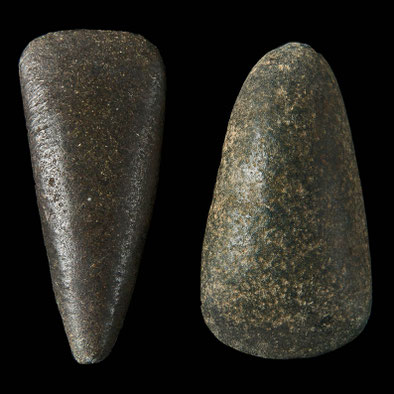
Among the Dogon, there exists a ritual to make rain fall. For this purpose, they use a stone called ãdugæ (thunder stone) or, more broadly, ãdugæ tibi (rain altar), as the stone is merely a vector associated with a “fetish.” According to Dogon belief, these stones fall with lightning. In reality, they are stones carved and polished by earlier civilizations, which villagers long ago found in the bush. Originally, these stones were hafted and used as axes. The stone is kept in the rainmaker’s house, buried underground, and no one other than the rainmaker himself or his eldest son, the heir, may see it, or it would lose its power. From a very young age, the heir to this power attends all the rituals performed by his father. During the rainy season, the rainmaker performs the ritual at the request of the villagers. At the end of the harvest, the villagers bring millet and a chicken to the rainmaker. He sacrifices the bird and has millet porridge prepared. He pours the blood and some of the millet porridge over the fetish located near the stone. He also pours a little onto the earth covering the stone, as thanks for the rain. The millet that was not used in the sacrifice is kept by the rainmaker. This prayer for rain is recited by Dinguibré Saye, who received it from his father, Méneyou Saye. At the beginning of the prayer, the rainmaker rubs the stone — the intermediary between himself and the invisible forces — with a piece of charcoal or caïlcédrat bark to purify it. Then the prayer begins. The rainmaker first greets various occult forces and asks the stone to intervene with them to bring down the rain. He then thanks God: “Thanks to you, Amma (God), we have spent a good night; may we now spend a good day. Amma, hear us, grant our prayer.”
He greets the various occult forces once again. Then, addressing ãdugæ tibi, he says: “If the tradition is true, show us your power.” He makes wishes for the crops while asking for rain. He also requests abundant harvests, better than those of others, and long life for the villagers who sowed the seeds. He then calls upon the spirits of the ancestors and the fulfillment of his wishes. He also asks for good health. He wishes for harvests so abundant that the farmers will have to call upon other villagers to help store them in the granaries. He again asks for good health, for marriages, for encounters for those seeking a soul mate, for children for those who desire them, and to be spared from epidemics and accidents. “May Amma grant our wishes.” He wishes for the livestock to reproduce. He then reiterates several elements already mentioned. At the end of the prayer, the rainmaker strikes the stone rapidly, signifying: “Amma, hear us, grant our prayer.”
Location and date: Mali, Téréli village. February 1996
Duration: 05:44. © Patrick Kersalé 1996-2026.