The Catholic Church establishes a clear distinction between prayer for the dead, which it strongly encourages within the framework of the communion of saints, and practices aimed at communicating with the dead through mediums or spiritist séances, which it strictly forbids. This position is not based on an a priori denial of paranormal phenomena, but on an anthropology and theology that place exclusive trust in God and in His Providence. It is grounded in Sacred Scripture, Tradition, and the Magisterium, while also acknowledging that contemporary scientific research explores mediumship using rigorous protocols.
Reading further…
Why the Dead Must Remain Silent?
Prayer for the Dead: An Act of Charity and Hope
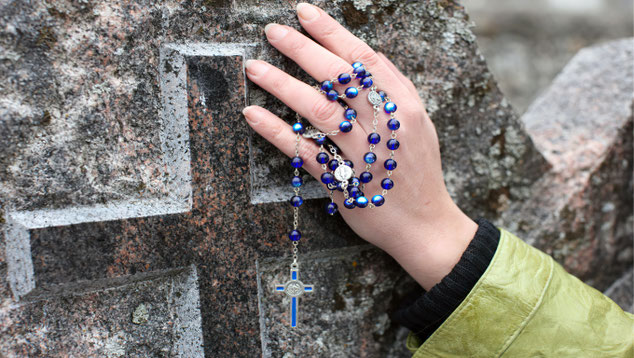
The Church invites the faithful to pray for the souls of the deceased, particularly those who are in Purgatory. This practice is rooted in the conviction that death does not interrupt the communion between the members of the Church: the living can help souls undergoing purification through their prayers, almsgiving, indulgences, and above all through the Eucharistic sacrifice. In return, the deceased, once in Heaven, intercede for the living. The Catechism of the Catholic Church (CCC) explains this doctrine in paragraphs 1030-1032: "Those who die in God's grace and friendship, but still imperfectly purified, although they are assured of their eternal salvation, suffer after death a purification, so as to achieve the holiness necessary to enter the joy of heaven. The Church calls Purgatory this final purification of the elect [...]. This teaching is also based on the practice of prayer for the dead, already mentioned in Sacred Scripture: 'Thus [Judas Maccabeus] made atonement for the dead, that they might be delivered from their sin' (2 Maccabees 12:46). From the earliest times, the Church has honored the memory of the dead and offered prayers in their favor, above all the Eucharistic sacrifice."
This doctrine was clarified at the Councils of Florence and Trent. The All Saint's Day (November 1st) and the Commemoration of All the Faithful Departed (All Souls' Day, November 2nd) are its most visible liturgical expressions. Prayer for the dead is a spiritual work of mercy, addressed to God through Christ, and not a direct invocation of the deceased to obtain information or personal favors.
The Prohibition of Necromancy and Mediumistic Practices
Conversely, the Church rejects any active attempt to evoke the dead, that is, any active attempt to make them appear or to communicate directly with them through mediums. CCC 2116 is explicit: "All forms of divination are to be rejected: recourse to Satan or demons, conjuring the dead, or other practices falsely supposed to 'unveil' the future. [...] They contradict the honor, respect, and loving fear that we owe to God alone." This condemnation is based on the Old Testament: "Let no one be found among you who [...] consults the dead. For whoever does these things is an abomination to the LORD" (Deut 18:10-12; see also Lev 19:31; 20:6, 27).
The episode of the Witch of Endor (1 Sam 28), where Saul has Samuel summoned, illustrates the dangers of these practices, even though the appearance itself is debated among the Church Fathers. Catholic theology clearly distinguishes the intercession of the saints (friends of God, invoked publicly in the liturgy) from the occult consultation of the dead, which is often considered to risk demonic intervention or superstition. Even in the case of authentic apparitions permitted by God (such as those of saints or the Virgin Mary), the human initiative to evoke the dead remains prohibited.
Beyond the theological dimension and the risk of demonic influence, the Church also formulates a warning of an anthropological and pastoral nature, more prosaic in tone. The dead, according to Tradition, are not at the disposal of the living: they speak when they deem it opportune and useful, not upon simple human summons. Resorting to a medium also introduces a real risk of exploitation: some practitioners, driven by the lure of profit, may deliver — consciously or not — flattering information or information that matches the client's expectations, exploiting their emotional vulnerability (grief, need for reassurance, guilt). This potential dependency risks fostering the illusion of control over the afterlife and weakening trust in Divine Providence. The Church thus warns against a practice that, even without malicious intent, can become psychologically and spiritually alienating.
Scientific Perspectives on Mediumship
Contemporary research in parapsychology has examined mediumship under rigorous protocols (triple or quintuple blind, anti-fraud controls). The Windbridge Research Center (Julie Beischel and colleagues) has published studies showing that certain certified mediums provide accurate information about deceased persons unknown to the medium and without sensory feedback. A meta-analysis by Sarraf et al. (2021), covering controlled studies between 2001 and 2019, concludes that there is a statistically significant above-chance effect for Anomalous Information Reception. The authors estimate that some mediums appear to obtain information through unknown means. This research, often conducted at the University of Virginia (Division of Perceptual Studies) or by institutions such as the Institute of Noetic Sciences, raises fascinating questions about consciousness and post-mortem survival. However, these findings remain controversial within the scientific community due to issues of replicability, potential biases, and the lack of an explained physical mechanism. Alternative explanations (cold reading, unconscious cues, fraud) are regularly invoked.
The Church maintains its position independently of these findings: even if certain phenomena are authentic, resorting to mediums turns one away from a relationship of trust with God, exposes one to spiritual risks (demonic deception), and fosters a dependency contrary to Christian hope.
Conclusion
The Catholic position invites a spirituality centered on Christ: praying for the dead manifests charity and hope in the Resurrection; conversely, seeking to communicate with them through occult means expresses both a lack of trust in divine sovereignty and a real anthropological risk of illusion and dependency. This distinction remains relevant given the contemporary interest in spiritism and New Age practices. By reminding us that the dead are not at our disposal and that human mediation can be subject to abuses or emotional projections, the Church protects both the faith and the psychological health of believers. The faithful are encouraged to deepen the communion of saints through prayer, the Mass, and the works of mercy rather than through mediumistic consultations.
Bibliography
- Catéchisme de l’Église catholique. (1992). Libreria Editrice Vaticana. (Version française disponible sur vatican.va)
- Sarraf, M., St. John of, M. A. W., & Tressoldi, P. (2021). Anomalous information reception by mediums: A meta-analysis of the scientific evidence. Explore, 17(5), 396-402. https://doi.org/10.1016/j.explore.2020.04.002
- Windbridge Research Center. (n.d.). Completed studies. https://www.windbridge.org/research/completed-studies/
- New Advent. (n.d.). Catholic Encyclopedia: Necromancy. https://www.newadvent.org/cathen/10735a.htm
Écrire commentaire